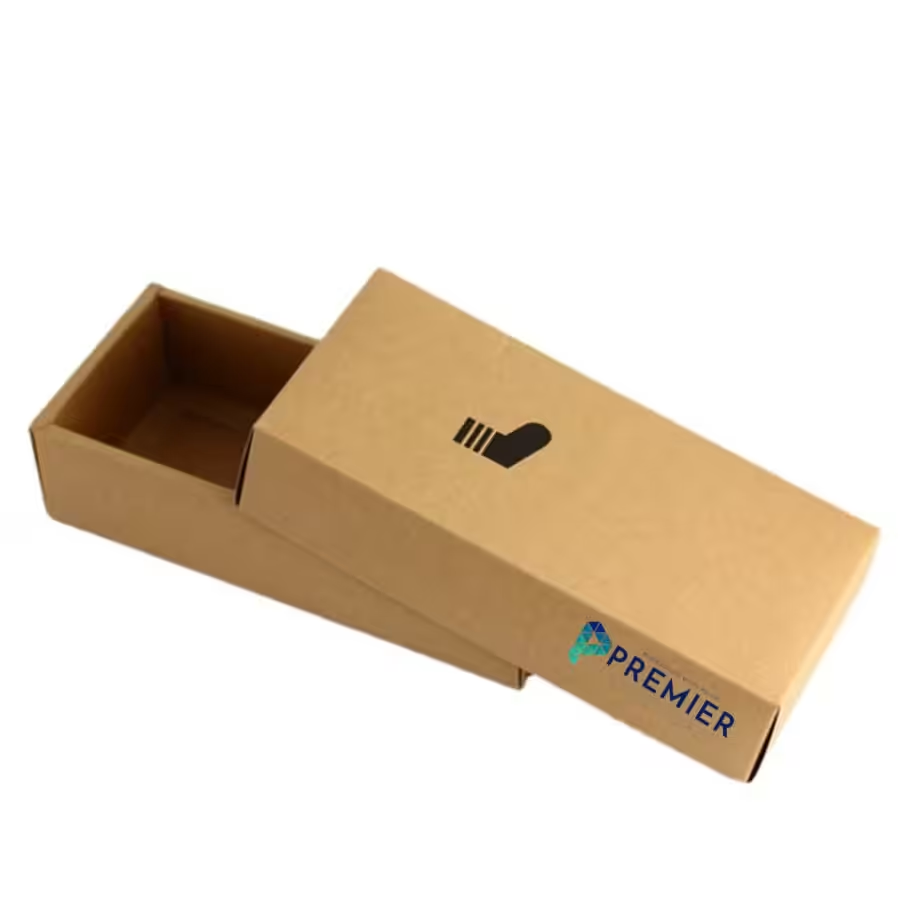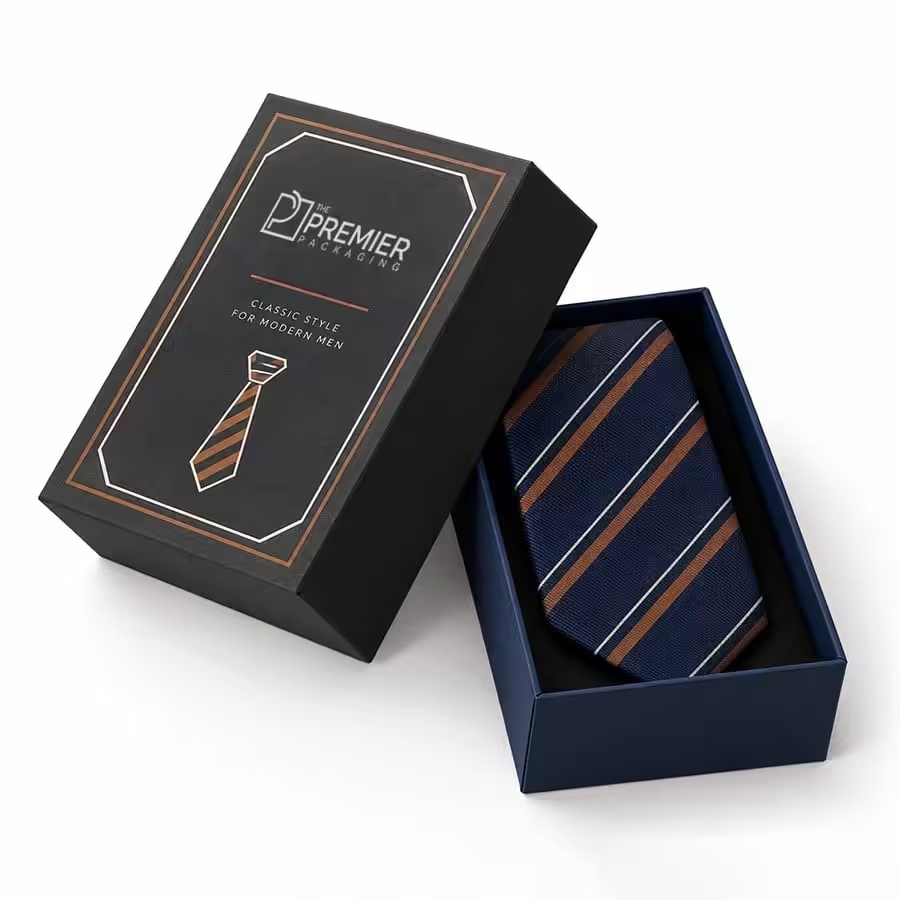
A tie is a very easy item to box. It’s thin, it’s flat, it folds down into nothing. Except that almost nothing has as much variation as people think, the “no knot” knot doesn’t fit in the same box as the flat knot, and the bulky knot style requires a new shape in the box. That doesn’t work, and you end up with slightly crooked, flattened, or centered ties as soon as you open the lid.
Flat Ties vs. Pre-Knotted Ties Are Really Different Packaging Problems
Most ties ship flat, rolled, or loosely folded, which keeps things simple — the box just needs enough length and a shallow depth to avoid crushing the fabric. Pre-knotted ties, though, aren’t flat at all. The knot itself adds real bulk at one end, and that bulk doesn’t compress evenly the way the rest of the tie does. But pre-knotted ties are not flat! The knot also provides true bulk at one end, and that bulk is not uniform; it is not compressed like the rest of the tie. Place a pre-knotted tie as you would a flat tie; the knot will typically rest against the lid and flatten or distort over time. When sourcing a generic tie box for an entire catalog, this is the part many companies overlook. The internal geometry of a flat silk tie and a pre-tied bow or knot style differs, although they may be the same length overall.
How Knot Style Changes What the Box Needs to Do
Four-in-hand and simple knots add moderate bulk, usually concentrated in one spot near the collar end. Packaging for these generally needs a bit of extra depth at that end, specifically, rather than uniform depth across the whole box.
Windsor and double-knot styles are bulkier still, and they hold their shape less forgivingly. Compress a full Windsor knot under a tight lid for long enough, and it can lose its crispness in a way that’s hard to reshape later. These benefit from a box built with real clearance around the knot, sometimes with a small internal support that keeps the knot from resting directly against any surface.
Bow ties are their own category entirely. The knot is wide rather than tall, which means the packaging problem shifts from depth to width. A bow tie needs a box shaped to accommodate its horizontal spread without flattening the bow’s wings. This is where bow tie boxes in bulk have become a common sourcing choice for brands carrying a dedicated bow tie line, since a generic necktie box rarely has the right proportions for a bow shape at scale.
Skinny and slim ties are the easiest case, since there’s minimal bulk anywhere along the length, but they’re also prone to shifting inside an oversized box if the packaging isn’t sized down to match their narrower profile.
A Comparison of Knot Styles and Packaging Needs
| Knot/Tie Style | Bulk Location | Main Packaging Risk | Design Priority |
| Flat/unknotted | Even, minimal | Folding creases | Shallow, even depth |
| Four-in-hand | Concentrated at the collar end | Localized crushing | Extra depth at one end |
| Windsor/double knot | Heavy, at the collar end | Loss of shape under pressure | Internal clearance or support |
| Bow tie | Wide, horizontal | Flattened wings | Width-focused internal shape |
| Skinny/slim | Minimal, throughout | Shifting in an oversized box | Narrower, snug-fit sizing |
Why Rigid Construction Helps More Than People Expect
Flexible boxes can sort of adapt to a tie’s shape, but that flexibility comes at a cost. A soft box bends under pressure rather than resisting it, which is exactly the wrong behavior when a knot needs to hold its shape during storage or transit. Custom boxes do better here because they maintain their internal shape, which matters a lot when there’s a knot or bow involved rather than just flat fabric. Brands producing a range of tie and bow tie styles often turn to an established supplier for structural consistency. The Premier Packaging is one example of a supplier built around exactly that kind of rigid, shape-holding construction, which tends to matter more for ties than people assume going in.
A Few Practical Adjustments Worth Making
- Build extra depth specifically where the knot sits, rather than padding the whole box evenly
- Use an internal support or ridge for bulkier knots like a full Windsor, so the knot isn’t resting flat against the lid
- Size bow tie packaging around width first, not length, since the wings are the part most at risk of flattening
- Keep slim tie packaging snug rather than reusing a standard-width box meant for bulkier styles
- Test with the actual knotted or tied sample, not a flat mockup, since a flat tie and a tied one behave very differently inside a box
Final Words
Tie packaging looks like it should be one of the simpler accessory categories to get right, but knot style quietly changes almost everything about what a box actually needs, where the bulk sits, how much clearance it needs, and whether the risk is depth or width. Matching the box to the actual knot or tie style, rather than using a single generic design across a whole product line, is what keeps a tie looking as sharp coming out of the box as it did going in.