In the residential and commercial settings, lift systems are used 24 hours, and safety and reliability are the key factors. Frequent maintenance guarantees unrestricted flow of floors and minimizes failure of systems. The owners of buildings rely on the systematic inspection procedures in order to ensure the standards of the performance. Also, the maintenance practices will decrease the risk of downtime and maintain the safety of passengers in high-traffic buildings in the routine work of modern urban infrastructure systems.
Vertical transport systems in modern buildings are heavily dependent and require regular monitoring and technical care. Lift repair and maintenance is a critical role in maintaining the safety of the systems, stability in their operations, and adherence to regulations. It entails regular check-ups, fault clearing, and on-time servicing in order to achieve long-term reliability and performance of complex elevator systems in residential and commercial structures.
Overview of Lift Systems and Their Components
Lift System types
Lift systems differ depending on an edifice and purpose. Traction lifts are powered by cables and counterweights. These systems are appropriate in the high-rise buildings because of speed and efficiency.
Hydraulic lifts are operated on fluid pressure. They can be found in low-rise buildings. Machine-room-less lifts have a compact design with the flexibility to install modernly.
Lift Systems have Core Components
Lift systems are made up of various components that are interconnected. Floor movement is controlled by motors and drive mechanisms. Systems are controlled by control panels and sensors, which detect faults.
Safety systems and doors guarantee the safety of passengers throughout. The elevator system has a number of components, which should be synchronized to promote safety. Any malfunction in these components has an impact on the reliability of the entire system.
Typical Lift System Problems that may need repair
Mechanical Problems
The mechanical problems arise as a result of constant use of the system. Motors can be unproductive with time. When put under continuous pressure, brake systems may fail.
The cable and pulley damage usually happens when the environment is highly used. These problems need to be addressed as soon as possible to avoid failure of the system.
Electrical and Control Failures
Electrical faults have effects on the accuracy and performance of systems. There are problems with wiring that may impair communication among components. The failure of sensors and panels may lead to a mismanaged response of the system. These defects decrease the stability of operations, and they need controlled repair mechanisms.
Door and Safety System Issues
There are usually alignment issues associated with door systems in busy buildings. The unsuitable door movement poses a risk to the passengers.
Emergency systems should always work properly. Mechanical failures in the elevator systems in safety mechanisms must be corrected as soon as possible to provide safety to the passengers.
Lift repair and maintenance Safety Regulations
Local and International Safety Standards
There are stringent elevator safety regulations by regulatory bodies. These standards are to be used during the process of installation, inspection, and repair. The compliance is guaranteed by building authorities, who conduct regular inspections.
Repair practices are also affected by global safety systems. The structures guarantee the consistency in safety in various regions.
Lift Systems Compliance Requirements
Lift systems should be compliant with lift regulations. These rules give safety requirements and standards of operations. The property owners will be responsible in ensuring compliance.
Safety checks are mandatory to assure reliability in the system. Operational restrictions may be as a result of failure to meet standards.
Lift Inspection and Certification Process
Routine Inspection Procedures
Frequent checkup guarantees the safety and performance of the system. Early detection of potential problems occurs with monthly and annual checks. Performance assessment assists in ensuring the stability of systems.
The lift inspection procedure is conducted to make sure that everything works properly. It minimizes the possibility of failures that are unforeseen.
Approval and Certification
With certification, it is established that there is compliance with safety regulations. Before the system is approved, authorities will examine the performance of the system. Building safe usage is possible with operational clearance. The standards of the elevator inspection provide the same monitoring and adherence for all systems.
Lift Repair and Maintenance Process
Fault Detection and Diagnosis
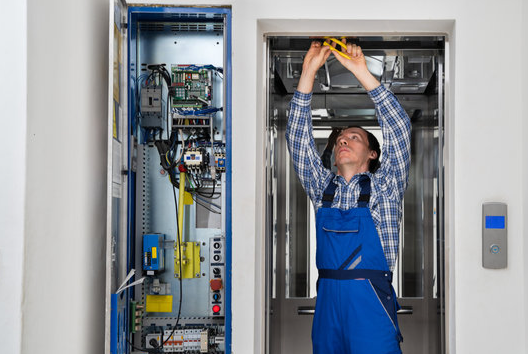
Technicians start with detecting system faults. They examine performance problems by inspecting them in detail. This is to make the correct diagnosis of problems.
Repair Planning and Repair
Repair planning is a process that involves the choice of replacement parts. Technicians make system settings appropriate. Planned implementation is used to make the system stable.
Checking and Safety Checking
Load testing tests the strength of the system under pressure. Checks in the emergency system guarantee the safety of the passengers. The operational readiness is verified by the completion of the repair workflow.
Cost Factors in Lift Repair and Maintenance
Repair Type to be done
The cost of repairing varies with the severity of the issue. Less time and resources are needed to make minor repairs. Major repairs entail complicated system repairs.
Cost of Equipment and Parts
Various lift systems have different components. Complex systems usually require special components. This adds to the general maintenance expense.
Work and Service Rates
The cost of service is determined by technician skills. The intricate repairs need trained experts. The prices of lift repair depend on the time of service and the complexity of the service.
Preventive Maintenance Strategies
Significance of Preventive Service
Planned maintenance minimizes malfunctioning of the system. It guarantees the functioning and safety standards. Checks that are preventive enhance the reliability of systems.
Building Preservation Plans
Commercial and residential buildings have different timetables. Regular servicing ensures that there is a uniform performance in the usage types. Commercial elevator maintenance needs to be more closely monitored.
Long-Term System Reliability
Early fault detection can be employed to avoid the occurrence of a breakdown. Preventive maintenance will improve the life of a system. Elevator maintenance will ensure that they continue to work.
Choosing a Lift Repair and Maintenance Service Provider
Experience and Certifications
Qualified people will provide proper repairs. Experience enhances the efficiency of solving problems. Safety standards are upheld by qualified technicians.
Response Time and Availability of Services
Fast response minimizes downtime of the system. The services are emergency services that provide round-the-clock operation. Trustworthy suppliers are 24/7.
Track Record and Service Quality
Reliability is represented by service history. The performance is consistent as indicated by client feedback. Maintenance companies of elevators need to observe high standards of service. The lift service providers are important in the reliability and assurance of safety of the systems.
Future Trends in Lift Maintenance Industry
Smart Monitoring Systems
The contemporary systems apply real-time tracking technology. Such systems are used to check performance in real time. Maintenance is enhanced with early warning.
Predictive Maintenance Technologies
With AI-based tools, the malfunctions can be detected prior to failure. Predictive systems minimize downtime and repair expenses. Elevator systems are smart and enhance control of the operation.
Integration with Smart Buildings
Lift systems currently are integrated with building automation. This combination enhances efficiency and coordination. Modern urban development is based on connected infrastructure
Conclusion
It takes organized maintenance, regular checks, and adherence to safety protocols to have safe and reliable elevator systems. Frequent checkups minimize the risk of breakdown and provide hassle-free performance of residential and commercial buildings. Technical precision and proactive maintenance should be the primary concern of the building owners to ensure sustainability of efficiency in the long term of its use in the contemporary infrastructure. Lift repair and maintenance are necessary in the modern infrastructure to ensure the reliability of the system, safety of the passengers, and consistency of the performance of the entire structure.
FAQs
What is the lift repair and maintenance in buildings?
It involves inspection, fault diagnosis, replacement of parts, and testing of the systems. The steps are to provide safe and stable lift operation in daily use.
How frequently should residential and commercial buildings have their lifts serviced?
The majority of buildings have monthly and annual service plans. Periodic maintenance minimizes the chances of breakdowns and ensures safety standards in the systems.
Why is lift maintenance important to safety?
Regular maintenance will guarantee early fault detection and avoid system failures. It also aids in adhering to safety measures.
What are typical indications that a lift requires repair?
The common signs include slow movement, strange noise, and malfunctioning of doors. Such problems point to the fact that lift repair and maintenance is to be done urgently.