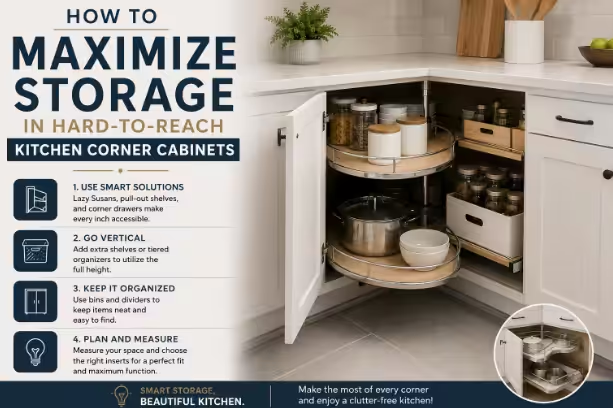
Kitchen corners often create some of the most frustrating storage areas in a home. Although corner cabinets may offer considerable interior space, their depth and unusual shape can make stored items difficult to see and reach. Pots, small appliances, food containers, and serving dishes can easily disappear into the back. For Milwaukee homeowners planning a kitchen renovation, the solution is not simply adding more cabinets. The goal should be to choose the right corner cabinet configuration and use accessories that make the entire interior accessible. From rotating shelves to pull-out systems, several practical options can transform an awkward kitchen corner into organized and useful storage.
Why Kitchen Corner Cabinets Are Difficult to Use
Standard cabinets usually open directly toward their storage area. Corner cabinets are different because much of their interior extends sideways or behind the adjacent cabinet. This creates a deep space with limited visibility. Items stored near the front remain easy to access, while products placed farther inside may be forgotten. Corner storage can become even more challenging in compact Milwaukee kitchens where every inch matters. A poorly planned cabinet may technically provide storage capacity without offering practical access. The right design should allow homeowners to reach items without bending deeply, removing several products, or stretching into the back of the cabinet.
Select the Right Corner Cabinet Configuration
Different kitchen layouts require different types of corner cabinets. The best option depends on the available space, surrounding cabinet sizes, door clearance, and storage needs.
Blind Corner Cabinets
A blind corner cabinet extends into the corner, but part of its interior sits behind the neighboring cabinet. This style is common because it works with many layouts, although the hidden section can be difficult to reach. Pull-out trays, sliding shelves, and swing-out organizers can improve access to the concealed area.
Diagonal Corner Cabinets
A diagonal cabinet faces outward at an angle. Its wider opening can make the interior easier to see and use. However, this style may take up more visible wall or floor space than other configurations. It often works best in medium or large kitchens.
Corner Drawer Cabinets
Corner drawers open diagonally and provide separate storage levels. They can make utensils, cookware, and smaller kitchen items easier to organize. Their internal storage capacity may be lower than that of a deep cabinet, but their accessibility can make them more practical for some households. Milwaukee homeowners comparing high-quality corner kitchen cabinets should consider both storage volume and everyday convenience. The largest cabinet is not always the most useful if reaching its contents remains difficult.
Use a Lazy Susan to Improve Accessibility
One of the most familiar corner storage solutions is a rotating shelf system. Instead of reaching into the back of the cabinet, the homeowner can turn the shelf and bring stored products toward the opening. A Lazy Susan storage system for a corner cabinet can work well for dry foods, pots, pans, bowls, and small appliances. Circular or kidney-shaped shelves are available depending on the cabinet configuration. Rotating shelves are especially useful when they include raised edges. These prevent containers and smaller items from falling behind the shelf as it turns. Before selecting a system, consider the weight of the items that will be stored. Lightweight shelves may be suitable for packaged food, while cookware requires stronger materials and dependable mounting hardware.
Organize Rotating Shelves by Category
A rotating system works best when its contents are arranged intentionally. Instead of placing unrelated products together, homeowners can assign a category to each shelf. One level may hold baking supplies, while another contains pots or food containers. Frequently used products should remain near the outer edge. Taller items should be arranged so they do not block smaller products from view. Avoid overcrowding the shelves. Although a rotating organizer makes the cabinet more accessible, too many loose items can still create clutter and prevent smooth movement. Small containers or bins can help group packets, spices, lids, and other items that might otherwise move around during rotation.
Consider Pull-Out Corner Storage
A Lazy Susan is not the only option for an awkward kitchen corner. Pull-out and swing-out systems can bring almost the entire cabinet interior into view. Some systems include trays that move outward individually. Others use connected shelves that slide and pivot through the cabinet opening. These accessories can be especially helpful for homeowners who have difficulty bending or reaching into deep cabinets. They also allow stored items to remain visible, reducing the likelihood of purchasing duplicates. Pull-out systems generally require accurate cabinet measurements. The shelves must clear hinges, cabinet doors, handles, and neighboring drawers. Because these systems contain moving parts, hardware quality matters. Strong rails and properly installed mechanisms can support smoother operation and better long-term performance.
Use Corner Cabinets for the Right Items
Not every kitchen item belongs in a corner cabinet. Frequently used cookware, mixing bowls, small appliances, and pantry products can work well when the cabinet includes an accessible organizer. Heavy cast-iron cookware may be better stored in deep drawers if the rotating or pull-out system has limited weight capacity. Items used only occasionally can be placed in deeper sections, but they should still remain organized and visible. Avoid using corner cabinets as general storage for miscellaneous products. Without a clear purpose, the space can quickly become a collection of items that are difficult to find. Assigning a specific function to the cabinet makes organization easier. For example, it may become a baking station, cookware area, food storage zone, or small-appliance cabinet.
Add Lighting Inside Deep Cabinets
Poor visibility makes deep cabinets more difficult to use. Small interior cabinet lights can help homeowners see labels, containers, and cookware stored toward the back. Battery-powered or motion-activated lights may be suitable when electrical wiring is not available. Built-in lighting can also be planned during a larger kitchen renovation. Good lighting is particularly helpful inside dark-colored cabinets or kitchens with limited natural light. During Milwaukee’s darker winter months, improved interior illumination can make everyday storage more convenient.
Keep Door and Hardware Clearance in Mind
Corner cabinet doors must open without colliding with nearby drawers, appliances, or handles. This is especially important in L-shaped and U-shaped kitchens where two cabinet runs meet. Large handles can interfere with adjacent doors if the layout is not planned carefully. Professional measurements can help identify potential conflicts before cabinets are ordered. Fillers may also be added near walls or adjoining cabinets to provide the necessary clearance. Badger Cabinets helps Milwaukee-area homeowners compare corner cabinet configurations, storage accessories, door styles, and layout options. Evaluating these details during the design stage can prevent accessibility problems after installation.
Match the Corner Cabinet With the Rest of the Kitchen
Function is important, but the exterior of the corner cabinet should also coordinate with the surrounding cabinetry. The door profile, color, finish, and hardware should follow the overall kitchen design. A well-integrated corner cabinet should not look like a separate storage unit added later. Shaker doors can support transitional, farmhouse, and modern kitchens, while raised-panel styles suit more traditional interiors. Flat-panel doors can help a compact kitchen feel streamlined. Inside the cabinet, however, homeowners can prioritize function. Rotating shelves, pull-out trays, and organizers can remain hidden behind doors that match the rest of the room.
Avoid Common Corner Cabinet Mistakes
One common mistake is choosing a corner cabinet based only on its interior size. A large cabinet with a narrow opening may be less useful than a smaller unit with accessible drawers or pull-outs. Another mistake is adding an organizer without checking its dimensions and weight capacity. The system must fit the cabinet and support the items placed on it. Homeowners should also avoid filling every available inch. Leaving some open space makes it easier to rotate shelves, move trays, and retrieve items safely. Finally, corner storage should be considered during the overall kitchen design rather than after the other cabinets have been selected. Early planning provides more configuration and accessory options.
Final Thoughts
Hard-to-reach kitchen corners do not need to become wasted storage areas. The right cabinet shape, interior accessories, and organization system can make these spaces far more practical. Homeowners can choose from well-built corner cabinet solutions, rotating organizers, swing-out shelves, and pull-out trays according to their layout and storage habits. A properly selected rotating shelf for a corner kitchen cabinet can improve visibility and bring stored items closer to the door. Meanwhile, pull-out systems may provide better access for deep or blind corners. By combining thoughtful cabinet planning with durable hardware and clear organization, Milwaukee homeowners can turn an awkward corner into one of the most functional storage areas in the kitchen. Badger Cabinets can help compare corner configurations and storage options that support both the kitchen layout and the household’s daily routine.