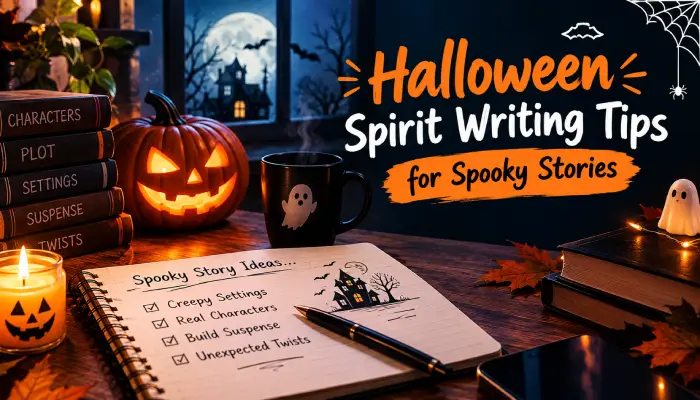
A creaking floorboard, lights flickering in an empty room, or a knock at the door when nobody is there. Sometimes, the smallest details create the strongest sense of fear.
Halloween is the perfect time to explore these moments and turn ordinary settings into something that feels unsettling.
Writing a spooky story does not require a parade of monsters or constant jump scares. The most memorable tales often build slowly, leaving readers uncertain about what they have seen and what might happen next… So if you are about to spend your time on spooky spirit writing for a short story for fun or developing a longer horror narrative, these tips can help you capture the Halloween spirit and keep readers turning the pages.
Halloween Spirit Writing Tips to Build Suspense
Keep these key details in mind to build that Halloween spirit while you pen down the story you have in mind.
Start With an Unsettling Idea
Every spooky story needs a central idea that makes readers curious. It could be a town where nobody celebrates Halloween anymore, or a child who receives a birthday card from someone who died years ago.
Try beginning with an ordinary situation and introducing one detail that does not quite fit. This will give your readers something familiar to connect with before the strange events begin.
If you are struggling to develop an idea into a complete narrative, study the techniques used by a ghostwriter Canada to explore how professional writers
- Build plots
- Develop characters
- Maintain a consistent tone
Pay attention to how a small mystery can grow into a larger problem.
Create an Atmosphere Readers Can Feel
Atmosphere is one of the most important elements of a spooky story. The setting should do more than provide a location; it should influence how readers feel about what is happening.
Consider the sensory details that make Halloween memorable.
- Think of wind rattling a loose window frame.
- Or some wet leaves which stick to the pavement.
- A distant dog barks once and suddenly falls silent.
These details help readers imagine the scene without requiring lengthy descriptions.
You need to choose details carefully instead of describing everything in the room. A single muddy footprint beside a locked door can create a lot more tension than using multiple paragraphs to explain how old the building looks.
Weather, lighting, sounds, and smells can all contribute to the mood. So use them to support the story, not just to add spooky imagery because it fits the season.
Make Your Characters Feel Real
Your readers are more likely to care about a frightening situation when they understand the person experiencing it. Give the characters believable fears, habits, relationships, and reasons for making their decisions.
For example:
- A teenager who refuses to enter an abandoned house would obviously be afraid of what happened there years ago.
- An adult returning to their childhood town might be hiding a memory they have spent decades avoiding.
These personal details make the horror more meaningful.
Along with facing a frightening situation, a character may also be confronting grief, loneliness or an unresolved conflict in their mind.
Build Suspense Before Revealing the Horror
A very easy step that will instantly weaken your spooky story is revealing the threat too early. If readers immediately know what is hiding in the basement, there may be little room for uncertainty.
Instead, let the mystery develop through small clues.
- Perhaps a character hears footsteps above them in a single-storey house.
- Maybe an old photograph changes slightly each time someone looks at it.
Each clue should raise another question.
Readers might suspect a supernatural explanation, but give them enough uncertainty to consider other possibilities.
This is where careful planning can help. Some writers use book writing services to explore manuscript development and editing support when they are working on longer projects. Regardless of how you approach the spirit writing process, make sure every reveal adds something to the story instead of simply repeating the same scare.
Use Fear of the Unknown
A visible monster can be frightening, but something that the readers cannot see may be even more unsettling.
The imagination often fills gaps with possibilities that are more disturbing than a complete description.
- You can show a character noticing a second shadow when only one person stands under the streetlight.
- Or let them hear someone whisper their name from an empty room.
And no, you do not need to explain every strange event. Some mysteries can remain unresolved, especially in short Halloween stories where ambiguity suits the ending.
But remember that this uncertainty should feel deliberate. Give readers enough information to follow the events, even if they cannot determine exactly what caused them.
Choose Words That Match the Mood
The language you use is going to shape the atmosphere of a story. Short sentences can make a moment feel abrupt or urgent, while longer sentences can slow the pace and allow dread to build.
Read this first:
- The door opened.
Compare it with:
- The door creaked inward, stopping just wide enough for the darkness behind it to appear.
Both sentences are describing a similar event, but the second one creates a more specific image. Halloween spirit writing tip includes knowing when to add detail and when to leave space to let the reader imagine what lies ahead.
Also, avoid filling every paragraph with words such as terrifying and sinister. Instead, show the details that make a situation disturbing.
For example, a child’s shoes arranged neatly outside an abandoned bedroom can be more effective than repeatedly telling readers that the house is frightening.
Give Your Story a Strong Halloween Setting
Halloween offers plenty of familiar settings, including pumpkin-lit porches, deserted streets, corn mazes, old cemeteries, and houses decorated for trick-or-treaters.
You can use these locations while adding an unexpected twist.
- Imagine a haunted attraction where one room contains a family photograph that nobody remembers taking.
- Or picture a neighbourhood where every house has decorations except one, whose owner insists Halloween was cancelled years ago.
The setting should influence the plot. Ask yourself what could happen in this location that would be impossible or less effective somewhere else.
Writers preparing stories for public readings or Halloween events can also consider how a suspenseful passage sounds when spoken aloud. In this case, taking help from a speech writing service can offer useful insight into pacing and audience engagement.
End With a Reveal That Matters
You don’t need a dramatic twist always to show a spooky ending, as sometimes the most effective conclusion is the one that changes the meaning of an earlier scene or can leave readers with one detail that feels unsettling.
For example:
- A character can escape a haunted house only to discover that the muddy footprints have followed them home.
- Another story can reveal that the mysterious voice was never coming from outside the locked room.
If you choose a twist, make sure it feels earned. Readers should be able to look back and recognize the clues without feeling that the ending came from nowhere.
FAQS
Can a spooky story be suitable for children?
Yes, you can adjust the intensity of the frightening scenes, the language used in the story and the themes to suit the intended age group. The use of humour, mystery, friendly ghosts, and mild suspense can create an enjoyable Halloween story without graphic horror.
How can I avoid clichés when writing a haunted house story?
You can avoid sounding repetitive by giving your location a unique history or changing the expected explanation for the strange events. This makes familiar settings feel original but also keeps the details and motivations specific to your story.
Should every Halloween story include a supernatural element?
No. Psychological suspense, unexplained coincidences, local mysteries, and ordinary characters facing unsettling situations can all create a Halloween atmosphere. Your goal should be to maintain tension and make readers curious about what happens next.
Wrapping Up
Adding ghosts and abandoned buildings is a good approach for Halloween spirit writing but to create a memorable one, you need to focus on believable characters, an atmosphere that builds naturally, and suspense that gives readers a reason to keep going.
This is why the first step should be to choose details that make your story setting feel real and also resist the urge to explain every mystery. Most importantly, let the fear develop at its own pace. Sometimes, the scariest moment is the one that happens just before the reader discovers what is waiting in the dark!