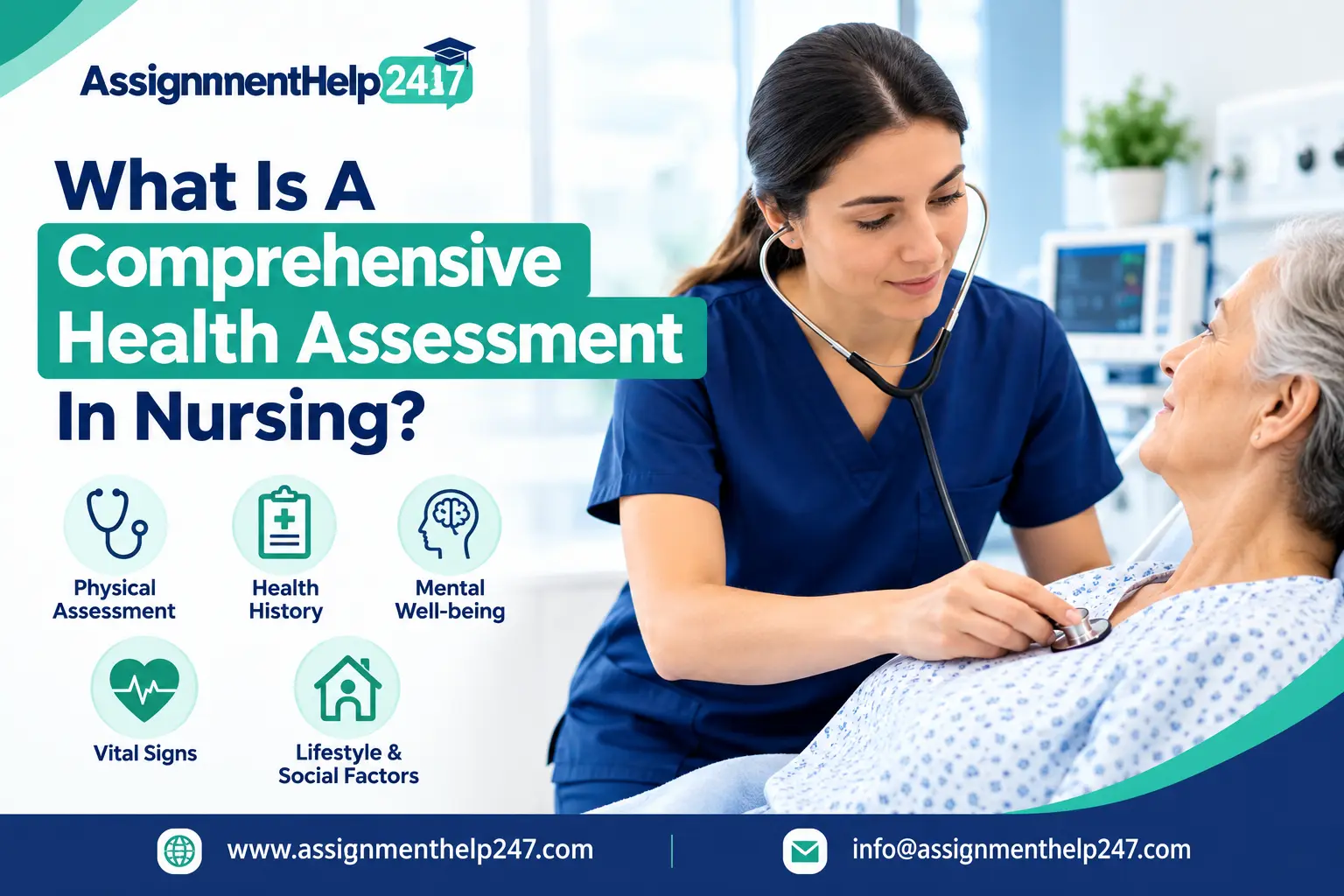
What is included in a comprehensive nursing health assessment? Nursing involves gathering extensive information on the health background, physical state, lifestyle, symptoms, and emotional well-being of the patient.
Performing Thorough Physical Examinations For Precise Clinical Insights
A patient’s well-being may not be evaluated only through one symptom.
Many things like their medical history, physical state, lifestyle, mental state, and environment may influence their health. For that reason, the comprehensive health assessment in nursing is an essential element in caring for a patient.
It provides nurses with a systematic method for gathering and interpreting information regarding the patient. The information-gathering process could involve a number of inquiries regarding past diseases, present complaints, medication, allergic reactions, lifestyles, and family background, along with a physical examination and measurement of vital signs.
The nurse may also consider emotional and social factors where necessary for the needs of the patient. Through the integration of all these aspects, the nurse can create a better understanding of the patient and utilize the information for providing proper care.
What Is A Comprehensive Health Assessment?
A comprehensive health assessment in nursing is a thorough evaluation process that is utilized to learn more about the overall health of a patient rather than concentrating on one symptom. This kind of evaluation involves data collected from conversations, observations, physical examination, and health records.
The nurse can ask questions regarding symptoms that the patient currently has, past diseases, operations, medication, allergies, family history, lifestyle, sleep habits, nutritional intake, ability to move around, and emotional state.
Physical observation can include vital signs and other observations depending on the condition of the patient. These observations provide nurses with a better basis for care planning.
Patient History Builds A Clearer Health Picture
The patient’s medical history is essential. The medical history gives the nurse an idea about the health conditions and the possible causes of the patient’s present signs.
Such questions may include past diseases, admissions, surgeries, allergies, medications, family illnesses, and the reason for the present visit. The nurse may also inquire about the time when the symptoms began, their changes, and their impact on everyday life.
A comprehensive health assessment in nursing incorporates all this information together instead of analyzing each piece of information separately. This can help nurses get a complete picture of the patient.
Accurate Records Strengthen Patient Care
The data gathered through assessment should be recorded properly. Proper documentation serves as evidence that will facilitate communication among nurses and other professionals working in the same team.
Nursing students who face difficulty in organizing the assessment data can avail an Assignment Writing Service to get help in structuring the writing, gaining clarity about nursing concepts, and organizing the assessment data accurately.
Physical Findings Reveal Important Health Changes
Physical Assessment allows the nurse to collect data from the patient using observation and examination. The exact physical assessments carried out vary according to the condition of the patient and the reason for the physical assessment.
Vital Signs like temperature, pulse rate, respiratory rate, blood pressure, oxygen level, etc. can be some indicators of the present condition of the patient. Many more physical assessments can be observed by the nurses.
A comprehensive health assessment in nursing involves linking this physical evidence with data that is gathered from the patient. It is easier to understand when several findings are analyzed as opposed to a single finding.
Emotional And Social Details Improve Patient Understanding
Physical health is interrelated with emotional and social well-being. Stress, anxiety, lack of sleep, inadequate support, job-related stressors, and family issues may affect one’s management of their physical health.
Nurses can appropriately address mood issues, coping strategies, relationship issues, living conditions, activity level, and support networks when relevant for a patient. This should be done with appropriate sensitivity and no judgment.
These factors are included in a comprehensive health assessment in nursing since they may affect a person’s compliance with their treatment, symptom management, recovery, and maintenance of a healthy regimen.
Clear Communication Supports Better Assessment
Good communication will make the process of assessment much more accurate and comfortable for the patient. Patients will feel more inclined to reveal all necessary information when they feel respected and listened to.
The nurse can use clear language, open-ended questions, listening skills, and proper follow-up questions. The nurse must give patients time to talk about their problems without interrupting.
Non-verbal communication can provide additional information as well. Any changes in facial expressions, movements, intonation, or behavior can inform the nurse about the state of the patient.
Assessment Findings Guide Individual Care
Information gathered from the assessment assists nurses in determining what kind of assistance the patient might need. This means that nurses do not have to apply the same technique to every single patient but may use information relevant to each patient.
One individual might need assistance with mobility and safety, while the other requires more emphasis on the issues of pain, nutrition, sleeping, medications, and psychological health.
For nursing students, nursing assignment help can assist them in their academic understanding of techniques for assessment, documentation, and care plans. Clinical skills, on the other hand, need adequate training and experience.
FAQs
What is a comprehensive health assessment in nursing?
Comprehensive health assessment in nursing is the evaluation of a patient’s health. This assessment may consist of the health history of the patient, physical findings, vital signs, lifestyle of a patient, their emotional state, social aspects, and other data which may be required to meet the needs of a patient.
What is covered in a comprehensive health assessment?
The comprehensive health assessment in nursing contains the patient’s medical history, present complaints, medications, any allergies, vital signs, physical examination, patient’s lifestyle, patient’s family history, emotional state, social aspects, etc.
Why is a comprehensive health assessment necessary?
The comprehensive health assessment in nursing allows the nurse to obtain broader knowledge about the patient and help in identifying the problems of patients, planning care, communication, monitoring, etc.
Who performs a comprehensive health assessment?
The health assessment can be done by nurses and other healthcare professionals who have appropriate training, depending on their roles, qualifications, practice settings, and profession. The particular health assessment varies according to the patient’s health status and needs.
How often does a complete health assessment occur?
It varies according to the individual, setting, medical status, and professional obligations. The complete assessment might be done at admission, but specific aspects could be re-evaluated when the individual’s status changes.
Conclusion
Comprehensive health assessment in nursing offers the nurse an opportunity to have a structured way of analyzing the total picture of the health of the patient.
It entails the integration of information about health history, physical assessments, vital signs, lifestyle factors, emotional status, social aspects, communication, and observation. It may assist in planning for the best care practices and communication among healthcare practitioners.
It also assists nurses in identifying any changes and determining those aspects that need extra focus. Knowing about the whole process of assessment is vital for nursing students because it helps lay down the groundwork for their future practice.
By gathering information correctly, communicating in a respectful way, documenting carefully, and evaluating change, nurses will be able to understand their patients better. This ensures that the care becomes more specific, informed, practical, and personalized.