Adarsh Pariksha Kendra: Artificial Intelligence (AI) is poised to revolutionize education by making learning more personalized, accessible, and effective. Over the coming years, AI will transform traditional classrooms, vocational training, workforce development, and lifelong learning, enabling smarter, more connected educational ecosystems. Here’s a detailed exploration of how AI will shape the future of education.
Personalized Learning Tailored to Each Student
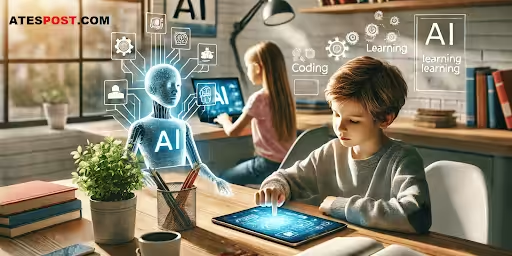
One of the most significant contributions of AI in education is personalized learning. AI-powered systems can analyze individual student data—including prior knowledge, learning pace, strengths, and weaknesses—to tailor lessons uniquely suited to each learner.
Generative AI tutors act like personal coaches, providing explanations, answering questions, and adapting support in real time. This mimics one-on-one human tutoring, which research shows dramatically improves learning outcomes.
AI systems help identify knowledge gaps early and recommend targeted exercises, enabling students to focus on areas needing improvement without frustration or boredom. By continuously adjusting to a student’s progress, AI can offer a dynamic curriculum that evolves with their development, making learning more efficient and engaging.
Expanding Access and Equity in Education
AI lowers barriers to quality education, helping democratize learning opportunities globally. Not every student can afford or access private tutors or elite institutions, but AI-powered digital tutors are scalable, offering personalized support to millions simultaneously.
AI-driven translation, speech recognition, and adaptive interfaces help learners with disabilities or language barriers engage fully, fostering inclusive classrooms. AI-powered platforms can bring quality education to underserved regions, addressing the shortage of qualified teachers and providing localized curriculum adaptations.
Supporting Educators and Enhancing Teaching
AI is not here to replace teachers but to augment their capabilities. It can automate administrative tasks like grading, attendance tracking, and progress reports, freeing teachers to focus on pedagogy and personalized student interaction.
AI-driven data analytics give educators insights into student engagement, misconceptions, or behavioral trends, enabling proactive support tailored to class needs. Professional development platforms powered by AI help teachers learn new skills, adapt to emerging technologies, and refine instructional techniques.
Workforce-Integrated Learning and Skill Development
With rapidly evolving job markets, education systems must keep pace with new skills demanded by employers. AI facilitates more connected education-to-employment pathways. AI-powered platforms tailor curriculums to align with industry needs, helping students acquire in-demand skills through apprenticeships, internships, and co-op programs.
Upskilling and reskilling adults in the workforce become more efficient through AI-enabled personalized corporate training, reducing costs and improving retention of learning. Governments and institutions are integrating AI to accelerate practical, job-ready education that aligns with labor market demands.
Creating Smarter, More Connected Educational Ecosystems
Future education will be a seamless network where AI connects various stakeholders: students, educators, institutions, employers, and policymakers. AI analytics will enable real-time feedback loops across the ecosystem, improving policy decisions, curriculum updates, and resource allocation.
Learning management systems powered by AI will integrate multiple data streams, providing holistic views of learner progress and institutional impact. AI’s predictive capabilities will help identify early signs of student disengagement or dropout risk, facilitating timely intervention.
Enabling Lifelong Learning and Continuous Improvement
AI facilitates lifelong learning, making it easier for individuals at any age to continuously update skills and knowledge. Personalized microlearning paths powered by AI help learners acquire new competencies flexibly amidst evolving career and personal demands.
AI-driven reflection and recommendation engines support learners in setting goals, tracking growth, and adapting learning strategies. Continuous learning ecosystems supported by AI will help society respond nimbly to technological advances and economic shifts.
Challenges and Ethical Considerations
While AI’s potential is enormous, its successful implementation requires addressing challenges: Privacy and data security must be prioritized as large volumes of sensitive learner data are collected. AI models should be transparent and bias-free to ensure equitable treatment of students from diverse backgrounds. Training educators to effectively collaborate with AI tools is essential to realize the technology’s full benefits
Conclusion
AI in education is transitioning from experimental to serious, scalable implementation globally. By 2025 and beyond, AI will provide highly personalized learning experiences, increase equity, support teachers, and strengthen workforce integration. The resulting smarter, more adaptable education ecosystems will prepare learners of all ages for a rapidly changing world, fostering lifelong skills, creativity, and critical thinking. AI is not just a tool; it is becoming a transformative partner in the future of education.
For guest post opportunities or more insights on AI in education, please contact https://atespost.com/.