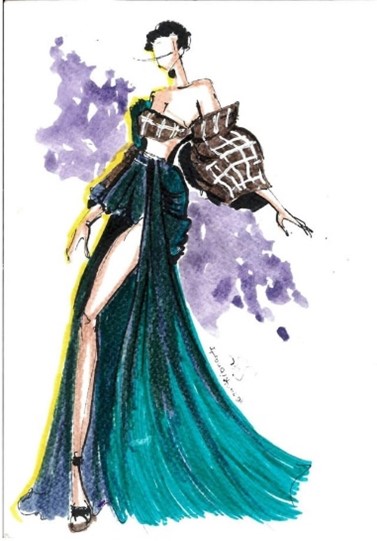
A fashion illustration book is a collection of drawings. And more than that, it is a visual diary of style, mood, and creativity. It captures the magic of a silk gown halfway, the bold lines of a tailored jacket, or the dreamy pastels of a spring collection.
Think of it as your personal couture gallery. One where you decide
- the theme,
- the models,
- And even the mood lighting.
Maybe it is a modern, edgy black-and-white collection with sharp ink lines. Just like a designer curates the collection, you will curate the experiences in those images.
By the time you are done, you will have a piece of fashion history in your hands. So, where do you begin crafting your own? Well, that is where this journey starts.
From Blank Page to Runway Dreams
Every great fashion story begins with a single line on a blank page. A flick of the wrist that hints at silk, sequins, or something no one has ever seen before. Fashion illustration is where imaginations walk confidently before the clothes even exist.
Where pencil and paint capture the drama, movement, and attitude of style, it is the place where ideas wear heels, twirl in chiffon, or stand sharp, instructed leather, all before a needle ever touches fabric. Think of a fashion illustration book as a runway frozen in time, each page a spotlight moment.
And here’s the magic: the possibilities are limitless. You could weave together collections inspired by Paris at midnight, 1970s disco glam, or even futuristic cyber couture. So, are you ready to turn that empty page into your own fashion universe?
1. Define Your Vision
Before your pencil touches the page, you need to know what story your fashion illustration books will tell. Every great collection starts with a mood, a moment, or a muse, and your book is no different.
- Are you channelling the sleek minimalism of modern street wear?
- The unapologetic glamour of the 1980s power dressing?
- The dreamy romance of vintage Paris?
Defining your vision gives your work a clear direction and turns a random collection of sketches into a reliable and irresistible experience. Let your imagination build a personality for your book.
2. Gather Inspiration
Fashion illustration does not live in isolation. It feeds on the world around you. The best ideas often come from a delicious mix of unexpected sources:
- The curve of an antique chair.
- The shimmer of the rain-soaked street at night.
- Or the daring color clash in a stranger’s outfit on the subway.
Start with a mood board. This could be digital or physical. Mix fashion with non-fashion elements like architecture, nature, vintage posters, and even textures you find in a local market. This cross-pollination of ideas is what keeps your work fresh and distinctly yours.
3. Choose Your Tools and Mediums
Just like a designer selects fabrics with care, a fashion illustrator chooses the tools that shape the soul of their work. The mediums you use will define the look of your illustrations and also the mood they convey.
- A fine-liner might give you crisp, confident lines.
- Watercolor offers a dreamy, fluid elegance.
- Digital brushes can mimic both.
- Metallic markers can add couture-worthy shimmer.
- Pastels can bring softness to streetwear looks.
- Ink washes can give your lines a cinematic depth.
When your medium matches your mood, every page of your fashion illustration book becomes a runway for your creativity.
4. Plan the Layout
A fashion illustration book reflects the art and how that art is experienced. Start by deciding the rhythm.
- Do you want each illustration to take center stage on a single page, bold and uninterrupted?
- Or would you prefer a collage-style approach, layering sketches and swatches to create a behind-the-scenes feel?
Give a room some space to breathe. Don’t let it overwhelm you. Just like an outfit, your book needs contrast between full-page art and minimal, airy spreads to show balance. Consider adding captions, quotes, or even design notes in the margins to give context without distracting from the images.
5. Add Depth with Extras
A beautiful fashion book catches the eye. Extras transform your work from a simple showcase into an immersive experience. Consider adding behind-the-scenes notes about each type.
- Your inspiration
- The fabric
- The story behind a pose
You can also add touches like handwritten annotations and design quotes from iconic fashion figures.
6. Binding and Presentation
The way you bind and present your fashion book is like the final fitting before a runway show. First, choose a format that matches your vision.
- A hardcover with glossy, high-weight pages exudes timeless elegance and gives your colors extra vibrancy.
- A softcover with matte paper can feel modern and easy to flip through.
- A lay-flat binding can give an artistic look.
Think of the cover as the face of your brand. It should instantly convey the mood of the book. Don’t forget details like typography, page edges, and endpapers. They are the accessories of your book.
7. Share Your Work
Once your fashion illustration book is complete, it deserves more than a quiet spot on your shelf. It should be out in the world, turning heads and inspiring others.
- Start with your inner circle, fashion enthusiasts, children illustration UK artists, and fellow artists who can help spread the word.
- Branch out to platforms where visual storytelling thrives.
- Sell the book on Etsy, Amazon, or a personal website.
Collaborating with fashion bloggers, illustrators, or even clothing brands can do wonders for you. You can also approach fashion schools, boutiques, or art galleries to stock limited editions.
FAQs
- What is the 9-head rule?
The body of the fashion figure is divided into 9 equal sections, ranging from the head to the ankle.
- How to create fashion ideas?
Identify your target market, gather inspiration, and research the latest trends and techniques.
- How to start writing about fashion?
Educate yourself on fashion history, study iconic designers, and stay up-to-date with current trends.
Conclusion
Creating an illustration book with fashion sketches involves compiling a collection of sketches, weaving your vision, technique, and personality into a tangible work of art.
- Defining your theme
- Gathering inspiration
- Choosing your tools
- Perfecting the layout
Every step is a chance to shape how your audience experiences your creativity. It tells a story, celebrates your growth, and captures a moment in your creative journey.
So go ahead, open that blank page, let your imagination lead, and create a fashion book that reflects your style.